
BASMOVE: Critical Cartographies of the Urban Body from Global Heritage to Contemporary Granada
This article examines the artistic project BASMOVE, developed in Granada as a choreographic, pedagogical, and critical practice of urban space. Through performative interventions and pedagogical processes, BASMOVE connects the African American roots of hip hop with the contemporary appropriation of Andalusian heritage spaces, articulating an urban bodily memory in constant rewriting. The article traces the origins of urban dance, its arrival in Europe, and its establishment in Granada’s cultural scene, highlighting the role of the digital archive, inclusive pedagogy, and interaction with cultural institutions. Finally, it reflects on the potential of the body as a tool for territorial transformation.
Introduction: The Body as an Instrument of Urban Memory
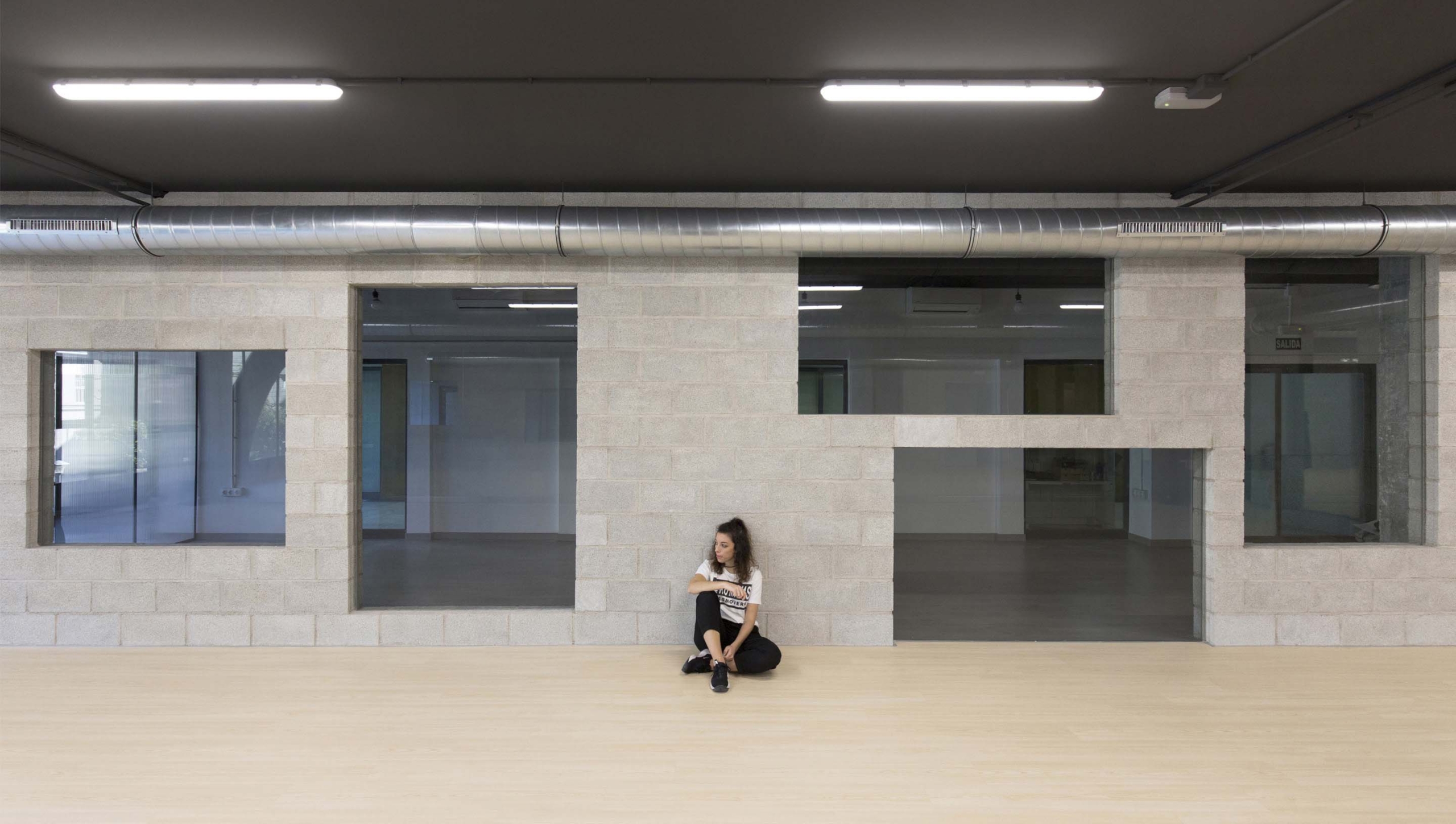
The city is a contested space where memories, emotions, regulations, and forms of control converge. Against the architectural rationalization of public space, the human body emerges as a subversive agent that destabilizes its normativity. Within this framework, the BASMOVE project proposes a reinterpretation of urban heritage through urban dance, understood not only as an aesthetic practice but also as a form of territorial resistance. On the website www.alvarogor.com, BASMOVE is presented as a school, digital archive, pedagogical laboratory, and space for shared creation (Álvarez-Gor, n.d.).
Genealogies of Urban Dance: African American Roots and Social Context
The origins of urban dance lie in New York City, in the African-descendant neighborhoods of the Bronx during the 1970s. These dances emerged as forms of resistance against racism, economic precarity, and institutional violence. Breaking, for example, combined acrobatics, spins, and free expression to represent not just style, but also identity and survival (Schloss, 2009). Hip hop, as a cultural movement, also integrated disciplines such as graffiti, DJing, and rap, forming a new mode of urban subjectivity (Chang, 2005).
Globalization of Movement: Hip Hop as a Transnational Language
From the 1980s onwards, hip hop crossed borders through mass media, music videos, and international tours. In Europe, it adapted to specific sociopolitical contexts. In France, for instance, it took root in the banlieues as a form of protest; in Germany, it connected with migrant movements; and in Spain, it found fertile ground for intercultural experimentation in Andalusia (Pardue, 2011). Urban dance thus became a global language that engages with diverse local heritages.
Granada’s Urban Scene: Between the Popular, the Heritage-Based, and the Peripheral
Granada, with its multicultural history and urban configuration, has welcomed various urban culture movements since the 1990s. Its dance scene has developed around collectives, schools, and informal spaces such as Plaza de la Universidad, Paseo de los Tristes, or the Mirador de San Miguel. The city, with its blend of Moorish tradition, university modernity, and youthful energy, offers a unique ecosystem where street dance takes on multiple forms (Llorca, 2022). The lack of specific cultural infrastructure has encouraged the spontaneous occupation of public space by young dancers.
BASMOVE: Situated Artistic Practices and Urban Pedagogy
Project Objectives
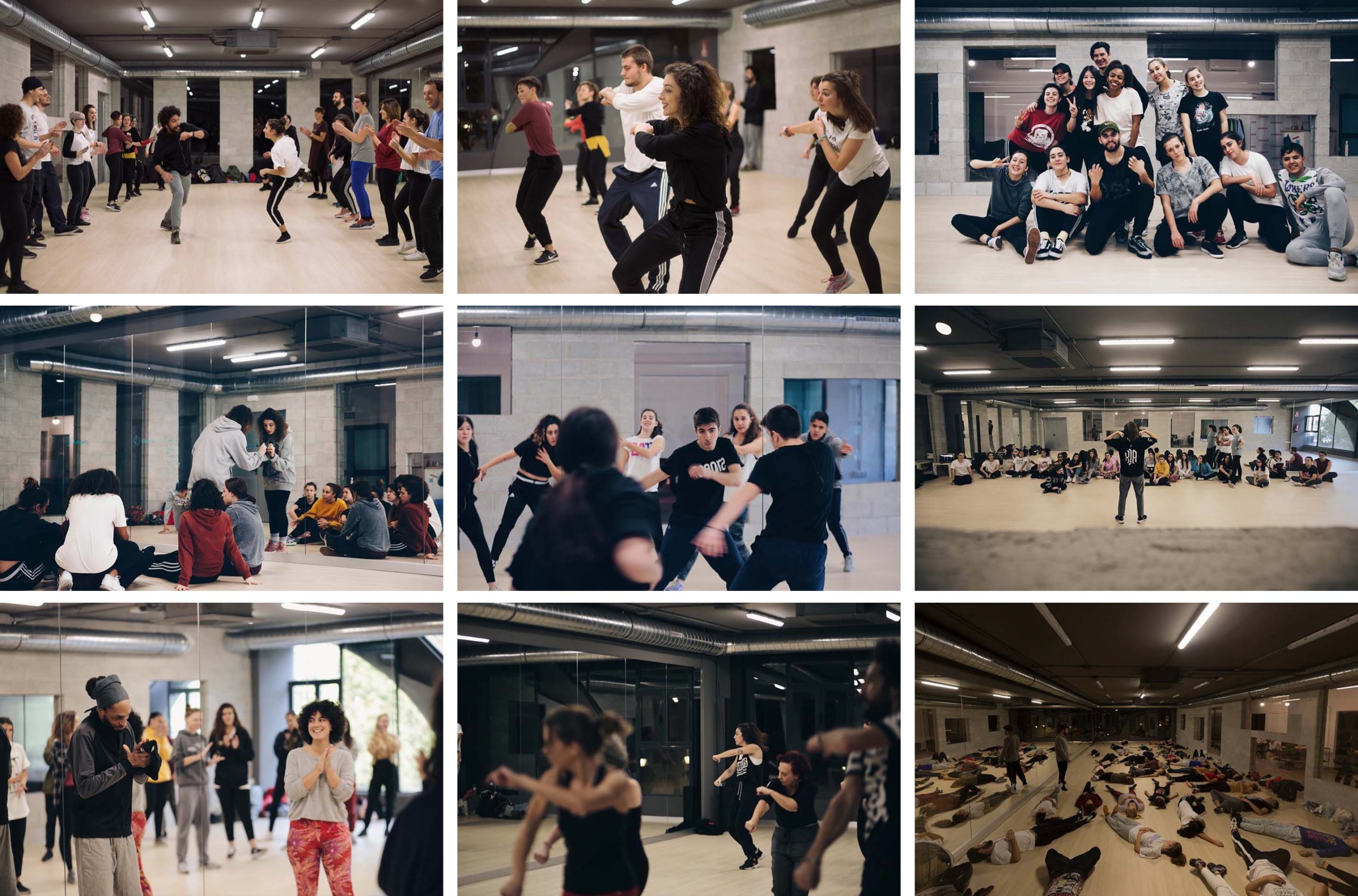
BASMOVE promotes an experimental pedagogy based on collective learning, sustainability, and inclusion. Its objectives include: (1) activating urban space through accessible choreography, (2) training young people in urban dance from a critical perspective, (3) digitally documenting actions to generate an archive, and (4) building community around the body and its memory.
Methodologies
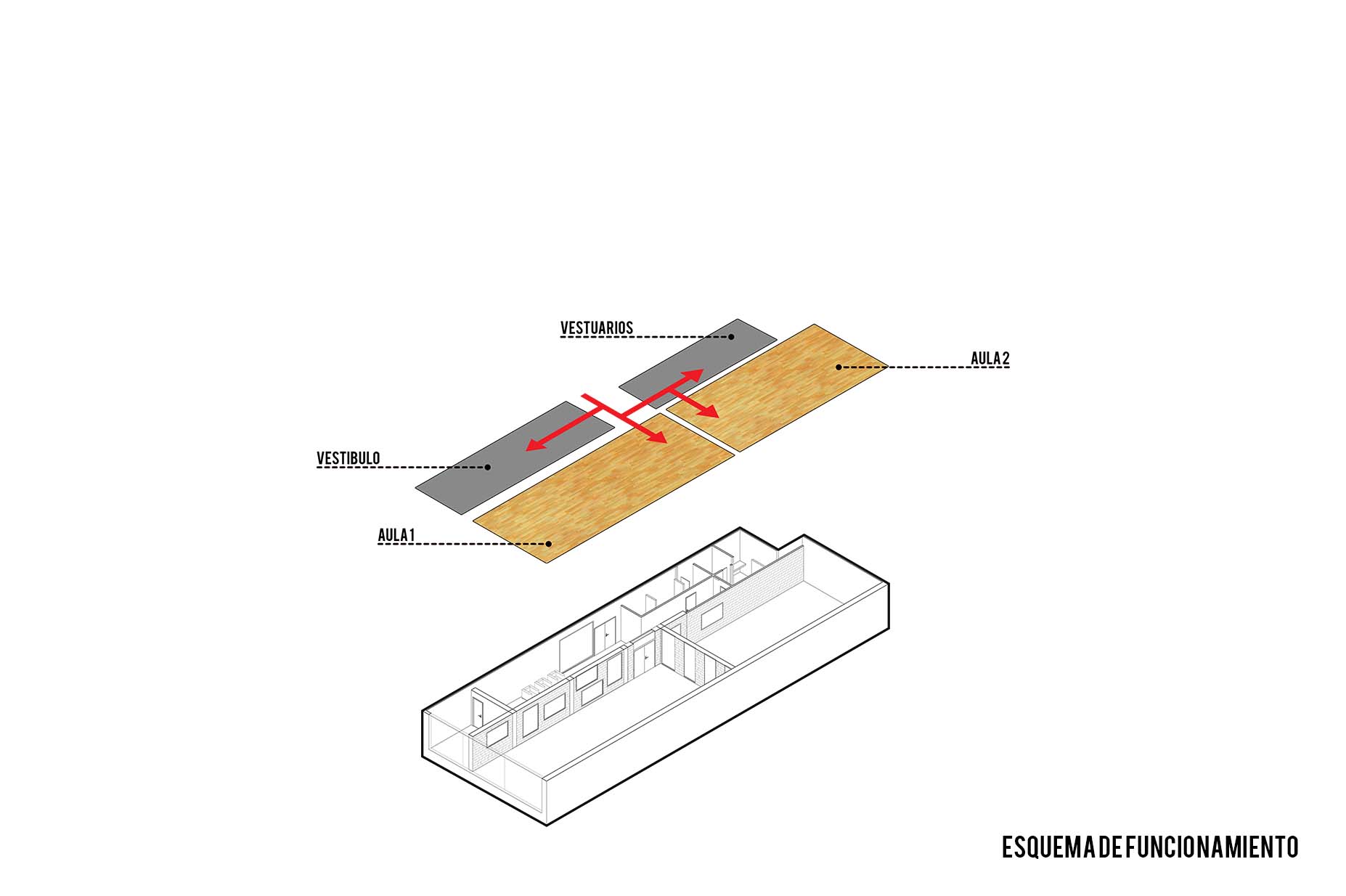
The project uses recycled materials (mirrors, portable structures) to create mobile scenographies integrated into plazas, courtyards, and stairways. Improvisation is key to the creative process. Actions are documented through photography, video, maps, and texts, which are then uploaded to the digital platform. Collaborations with DJs, performers, architects, and educators are also fostered.
Public Space Interventions: Bodies, Monuments, and Memories
One of BASMOVE’s most significant dimensions is its capacity to reinscribe dance into heritage sites such as the Alhambra, the Bañuelo, or the Albaicín. These interventions do not seek spectacle, but rather the friction between official history and living memories. Dance becomes a gesture that reinterprets the use of heritage, breaking its fetishization and proposing a more sensitive relationship with the city. In DeFrantz’s words (2004), “the dancing body reinscribes the city from its own biography.”
The Postdigital Archive: Bodily Memory and Online Devices
The BASMOVE archive is not merely documentary; it constitutes a performative device that extends the event into digital time. Photographs capture ephemeral gestures; videos integrate urban sounds, movement, and environmental response. The website interface organizes these materials using a curatorial approach, allowing navigation by location, date, and style. This archive not only preserves but acts: it triggers new actions, inspires other creators, and enables critical interpretations from a distance (Álvarez-Gor, n.d.).
Pedagogical Practices: Embodied Learning and Creative Citizenship
BASMOVE workshops go beyond dance technique. They include exercises in urban listening, emotional mapping, embodied writing, and landscape reading. The focus is on situated embodiment: each body brings its biography, its way of inhabiting the city, its limitations, and powers. This pedagogy promotes critical thinking, respect for diversity, and political imagination. Open classes and intergenerational gatherings strengthen the community component (BASMOVE, 2022).
Institutional Collaborations and Cultural Recognition
Thanks to its urban impact, BASMOVE has established partnerships with institutions such as the Granada City Council, the Gravite Festival, and the Granajoven program. These collaborations have broadened its reach and increased the visibility of urban art within the cultural fabric. Institutional recognition has been key to legitimizing practices once seen as “subcultural,” and demonstrating their educational and artistic potential. The 2023 Granajoven Block Party, for example, brought together hundreds of young people in celebration of local hip hop (Granada es Noticia, 2023).
Local–Global Dialectic: Granada as a Node of Expanded Hip Hop
BASMOVE illustrates how a city like Granada, with a strong historical identity and medium urban scale, can become a strategic node in the network of expanded hip hop. Its scene connects with international circuits while maintaining a strong local identity. In this context, urban dance is not just spectacle or entertainment—it is a way to think the territory through the body, history, and community.
Conclusions: Toward a Critical Choreography of Space
BASMOVE articulates an artistic model that goes beyond dance: it is a critical choreography of urban space where the body questions, activates, and resignifies its environment. From its African American roots to its insertion into Andalusian heritage, urban dance here is not a commodity or trend, but a political language, an educational tool, and a form of memory. Its potential unfolds on several levels:
-
Spatial: it reactivates invisible zones of the city through poetic gestures.
-
Social: it builds community through bodily and generational diversity.
-
Digital: it creates an expanded archive that prolongs the performative event.
-
Institutional: it redefines public culture and its agents.
This model can be replicated in other contexts, particularly in medium-sized cities with historical heritage and active youth populations. Far from being limited to technical codes, urban dance opens up new possibilities for imagining cities that are more sensitive, just, and livable.
References
- Alcalá Díaz, F. (2021). Hip hop andaluz: de la periferia al reconocimiento cultural. Granada Ediciones.
- Álvaro-Gor, Á. (n.d.). BASMOVE: Urban dance school & archive. https://alvarogor.com/portfolio-item/basmove/
- Ayuntamiento de Granada. (2023, September 15). La danza y la cultura urbana vuelve a las calles de la capital con la Block Party Granajoven 2023. Granada Es Noticia. https://www.granadaesnoticia.com/cultura/la-danza-y-la-cultura-urbana-vuelve-a-las-calles-de-la-capital-con-la-block-party-granajoven-2023
- BASMOVE. (2022). Jornadas de puertas abiertas. https://basmove.com/puertas-abiertas-22
- DeFrantz, T. F. (2004). Dancing Revelations: Alvin Ailey’s Embodiment of African American Culture. Oxford University Press.
- García Canclini, N. (1990). Culturas híbridas: Estrategias para entrar y salir de la modernidad. Grijalbo.
- Granada es Noticia. (2023, July 24). La Block Party Granajoven 2023 reúne a cientos de jóvenes en el Realejo. https://www.granadaesnoticia.com/cultura/la-block-party-granajoven-2023
- Llorca, R. (2022). Granada baila en las calles. Revista de Estudios Urbanos, 18, 45–68.
- Schloss, J. G. (2009). Foundation: B-Boys, B-Girls and Hip-Hop Culture in New York. Oxford University Press

