
Architecture in the face of speculation: evictions, urban planning blows and spatial strategies for the right to housing
Housing has ceased to be a guaranteed right and has become one of the main instruments of capital accumulation in the contemporary system. This shift—from a fixed asset to a financial asset—has caused a profound transformation of the territory, where the value of the land and real estate profitability prevail over living conditions.
In Spain, this phenomenon manifests itself in three interrelated processes: real estate speculation, “urban crashes” and the sustained increase in evictions. These processes are not independent, but respond to the same structural logic based on the subordination of the living space to the mechanisms of the global market (Girado, A. (2025). Eviction processes and advisory spaces).
Beyond its economic dimension, this phenomenon implies a cultural transformation: housing stops being a space of roots and becomes an abstract asset. In this context, architecture must position itself as a critical tool capable of intervening in the production of space and the redistribution of urban opportunities.
1. Financialization of the territory and “urban planning blows”:
The financialization of housing involves its integration into global investment circuits. The land becomes a commodity, and its value is detached from its social use.
In Spain, this model has materialized in large-scale urban planning operations that have generated:
-Uncontrolled urban expansion
-Territorial inequality
-Dependence on speculative cycles
This model has produced a structural contradiction: empty homes coexisting with a population without access to decent housing. Furthermore, it has intensified the gentrification processes, displacing the original inhabitants (Rodríguez Vázquez, R., & Cuerno, M. (2025). Quantifying displacement).
This process of financialization not only responds to global economic dynamics, but also implies a profound transformation in the way of conceiving the territory. Housing ceases to be a right associated with living and becomes a financial asset subject to investment, accumulation and profitability strategies.


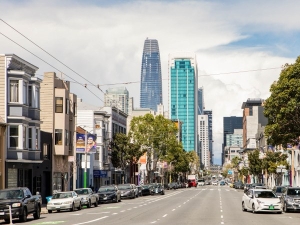
Central District, Hong Kong in 2020.
The extreme density and high price of housing reflect a model where housing is consolidated as a financial asset, rather than as a social right.


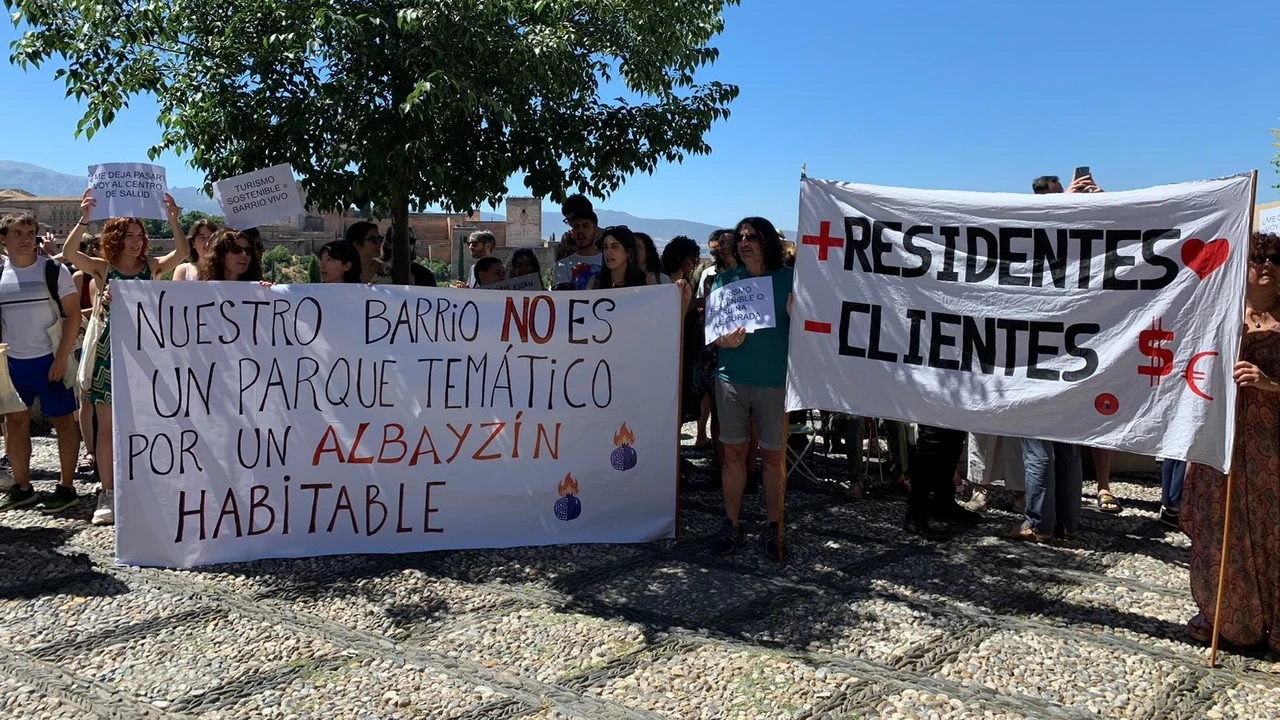
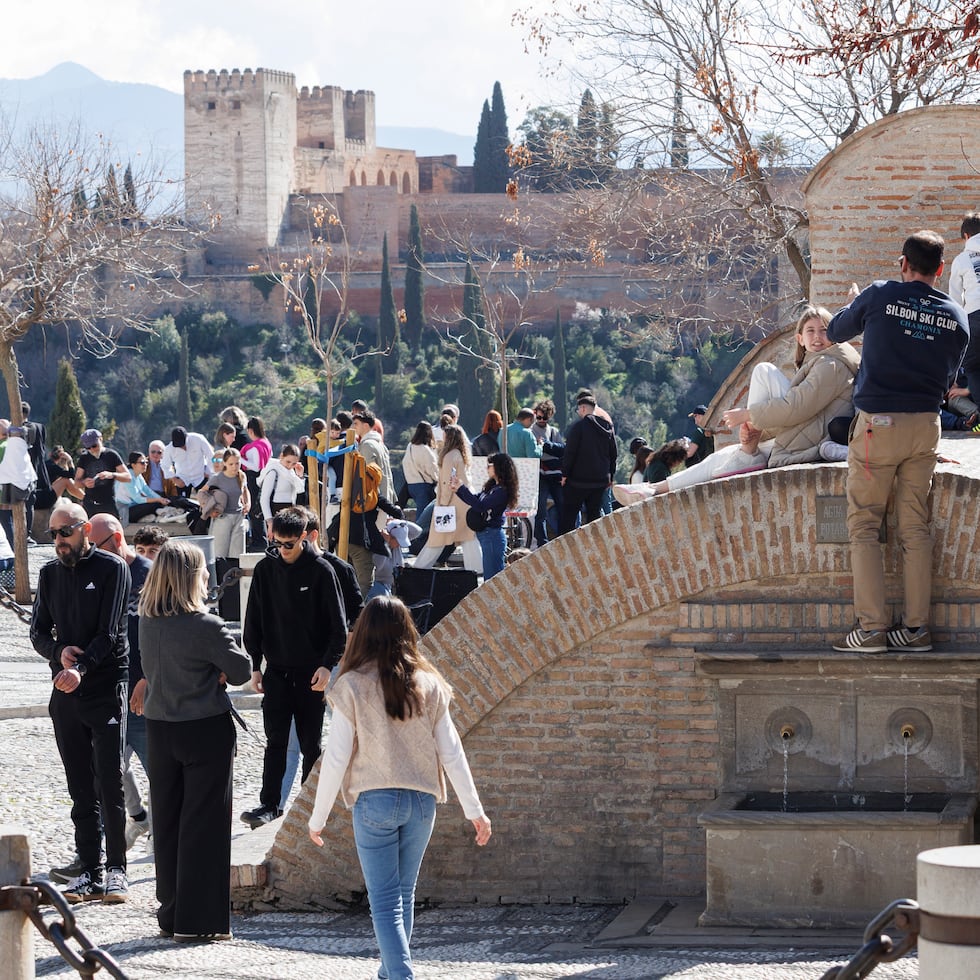
Photographs of the Albaicín neighborhood, Granada (2024).
Tourist pressure and short-term rentals have increased land values and reduced accessible housing for residents, exemplifying processes of touristification and financialization of urban space in historic centers (García-López et al., 2020).
The so-called urban bombings represent one of the most aggressive forms of territorial transformation in the contemporary context. These are operations in which the value of the land is artificially increased through regulatory changes, reclassifications or intensive developments, generating enormous private benefits at the expense of the collective interest. This phenomenon is closely linked to the consideration of land as a speculative asset, whose value tends to grow regardless of its real use, encouraging its accumulation and financial exploitation.
These processes are directly connected to dynamics of eviction, gentrification and social expulsion, where the city stops being a living space and becomes an investment product. Speculative logic alters the original urban project—as happened historically in plans such as the Ensanche de Cerdà, distorted by building pressure—and prioritizes profitability over habitability.
Faced with this, architecture and critical urbanism are presented as tools capable of resisting these processes, proposing spatial strategies that return centrality to the right to housing and the social dimension of the city, in opposition to a purely extractive logic of the territory.
El Quiñón Urbanization, Seseña (Toledo). Residential macrodevelopment promoted during the real estate bubble (2000–2008), characterized by thousands of initially empty homes and planning disconnected from real demand.
The case of Seseña constitutes one of the most paradigmatic examples of speculative urbanism in Spain. Conceived as a satellite city of Madrid, the project was developed without a solid demographic base, generating a huge amount of unoccupied housing after the outbreak of the crisis. The resulting urban image shows the disconnection between planning and social reality.
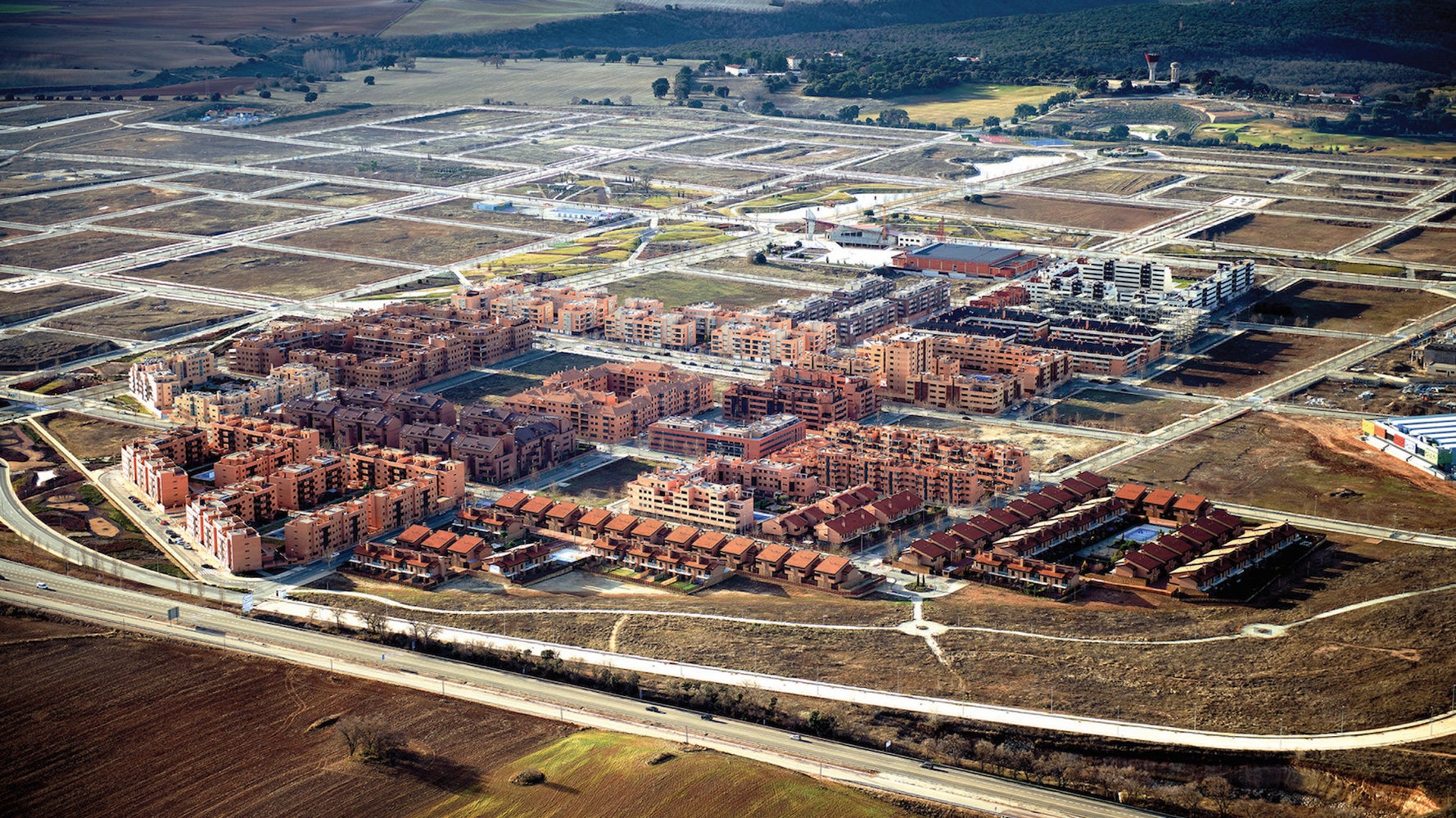

Valdeluz (Guadalajara). Urban development linked to the Madrid-Barcelona high-speed line, conceived as a new city but with low occupancy after the 2008 crisis.
Valdeluz was projected as a modern city articulated around the railway infrastructure. However, the overestimation of demand generated an oversized and partially empty urban landscape. This case illustrates how infrastructure can be instrumentalized as a speculative argument.

Marina d’Or, Oropesa del Mar (Castellón). High-density tourist-residential complex built during the real estate bubble, with strong seasonality and a high proportion of empty homes out of season.
This urban model, based on the repetition of high-rise residential typologies, responds to a logic of short-term profit maximization. The discontinuous occupation and dependence on tourism reflect the fragility of the model.
2. Evictions: the structural violence of space:
Eviction is the most visible manifestation of this crisis. It is not an isolated phenomenon, but a systemic consequence.
It implies:
-Loss of housing
-Community breakdown
-Vital precariousness
Especially in rentals, it shows the fragility of the contemporary housing system.
This phenomenon cannot be understood only as a legal procedure, but as a form of structural violence inscribed in the very functioning of the urban and economic system. Eviction is not the result of individual decisions, but the direct consequence of a model that subordinates the right to housing to the logic of the market.
The loss of housing involves much more than the loss of physical space. It involves the breakdown of social networks, the dismantling of community ties and the interruption of life trajectories. The home, understood as a space of stability, identity and reproduction of daily life, disappears, generating situations of vulnerability that extend beyond the moment of eviction.
In the Spanish context, after the 2008 crisis and in the subsequent scenario, evictions have taken new forms. If they were initially linked to foreclosures, they are currently increasingly associated with the rental market. The increase in prices, contractual instability and tourist pressure in certain cities have intensified this phenomenon.
Territorial examples of evictions in Spain:
_Barcelona: evictions and pressure from the rental market

Eviction in the metropolitan area of Barcelona. Police intervention during a launch linked to the increase in rental prices in central neighborhoods, where real estate pressure has intensified expulsion processes.
Barcelona has become one of the epicenters of the housing conflict in Spain. The combination of tourism, international investment and a shortage of affordable housing has led to a significant increase in rental evictions. The images of evictions accompanied by citizen protests reflect the social dimension of the problem.
_Madrid: evictions in vulnerable peripheries

Eviction on the outskirts of Madrid. Intervention in neighborhoods with high socioeconomic vulnerability, where rent instability and job insecurity increase the risk of losing housing.
In Madrid, evictions are especially concentrated in peripheral neighborhoods, where economic precariousness is combined with the lack of housing alternatives. This phenomenon shows the territorial dimension of inequality.
_Málaga: evictions and tourist-real estate pressure

Malaga, representative case of the relationship between tourist pressure, increase in rental prices and expulsion of the resident population in central areas.
In cities like Malaga, evictions are closely linked to the pressure of the tourism market and the transformation of the urban center into a space oriented towards consumption and investment. The growth of short-term rentals and the influx of real estate capital have caused a significant increase in prices, making access and permanence difficult for the resident population.
This phenomenon shows a new form of housing exclusion in urban contexts in southern Europe, where the revaluation of territory does not respond to local needs, but to global dynamics. As a consequence, large sectors of the population are displaced to less stressed peripheries, breaking social networks and altering the traditional structure of the city.
3. Habitability crisis:
Speculation not only limits access to housing, but also deeply degrades its quality. In the contemporary context, housing stops responding to well-being criteria and adapts to logics of profit maximization, generating increasingly smaller, densified and environmentally deficient spaces.
Among the main effects of this process are:
-Reduction of living space
-Worse ventilation and natural lighting
-Greater density without spatial quality
This generates minimal housing that does not guarantee decent conditions.
This transformation is not accidental, but structural. The pressure of the real estate market drives a progressive economic optimization of space, where each square meter becomes a resource to be exploited. As a consequence, homes are reduced in surface area, fragmented into minimal compartments and lose relationship with the exterior.
Habitability, understood as the capacity of space to sustain life in adequate conditions, is relegated to profitability criteria. The home stops being a place of personal and collective development and becomes a minimal functional unit.
This phenomenon intensifies in the most stressed urban contexts, where the increase in land prices forces increasingly compact housing solutions. The result is a form of spatial precariousness that, although less visible than eviction, has profound effects on daily life.
Contemporary examples of habitability degradation:
_Hong Kong: hyper-density and extreme minimal housing
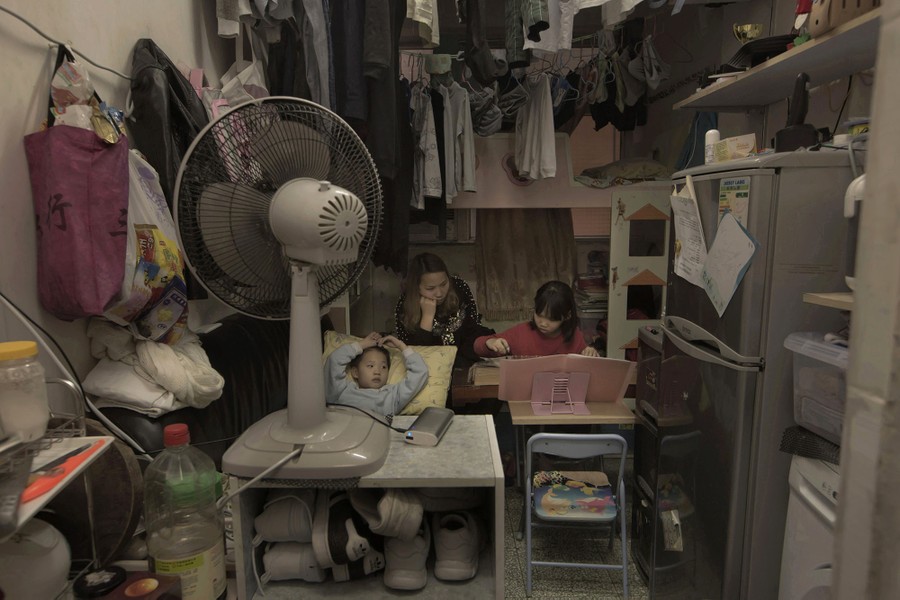

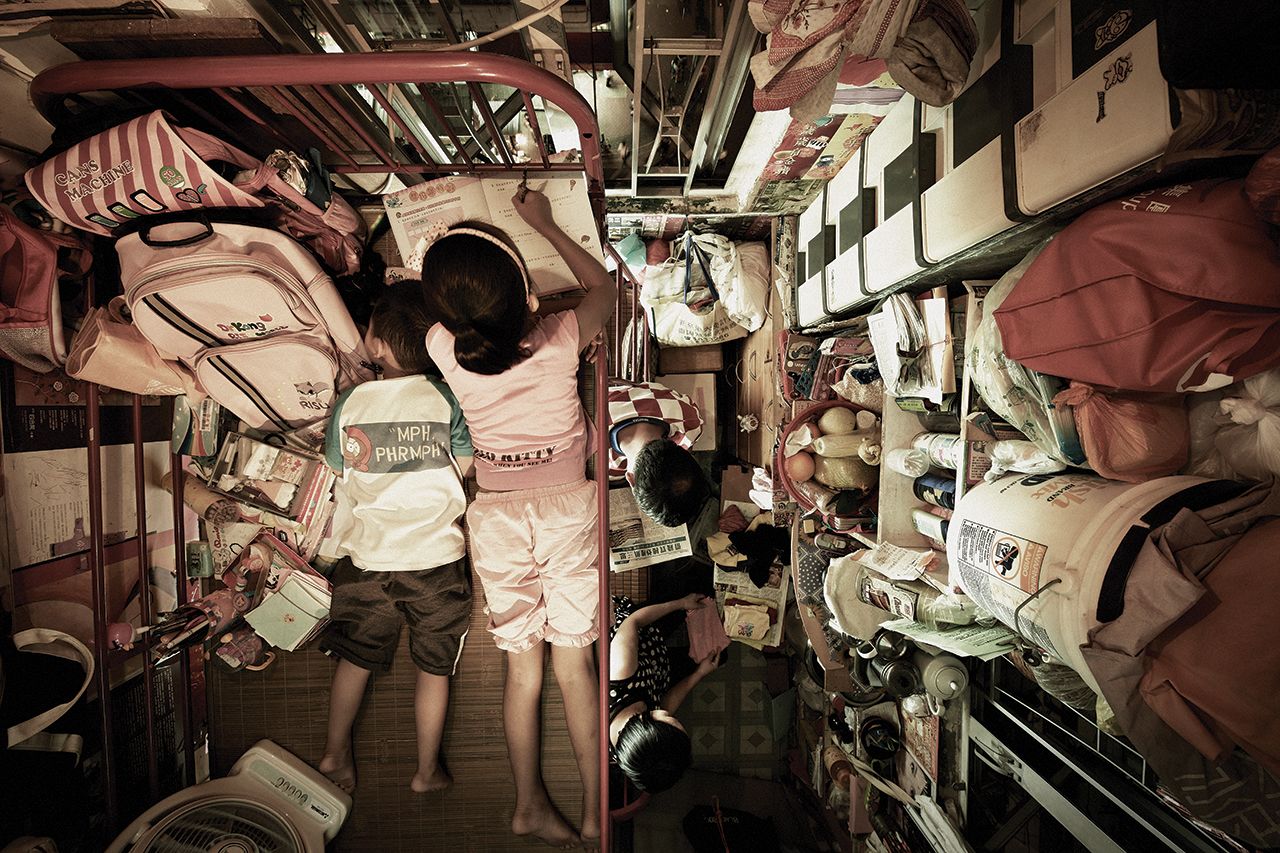
Subdivided housing in Hong Kong. Extreme example of living space reduction, where minimal residential units house multiple functions in overcrowded conditions.
Hong Kong represents one of the most extreme cases of habitability crisis. The pressure of the real estate market has led to the appearance of subdivided homes – known as cage homes or coffin homes – where living space is reduced to a few square meters.
This case illustrates the extent to which speculative logic can transform housing into a minimal container, disconnected from any standard of dignity.
_Madrid and Barcelona: microhousing and overoccupancy

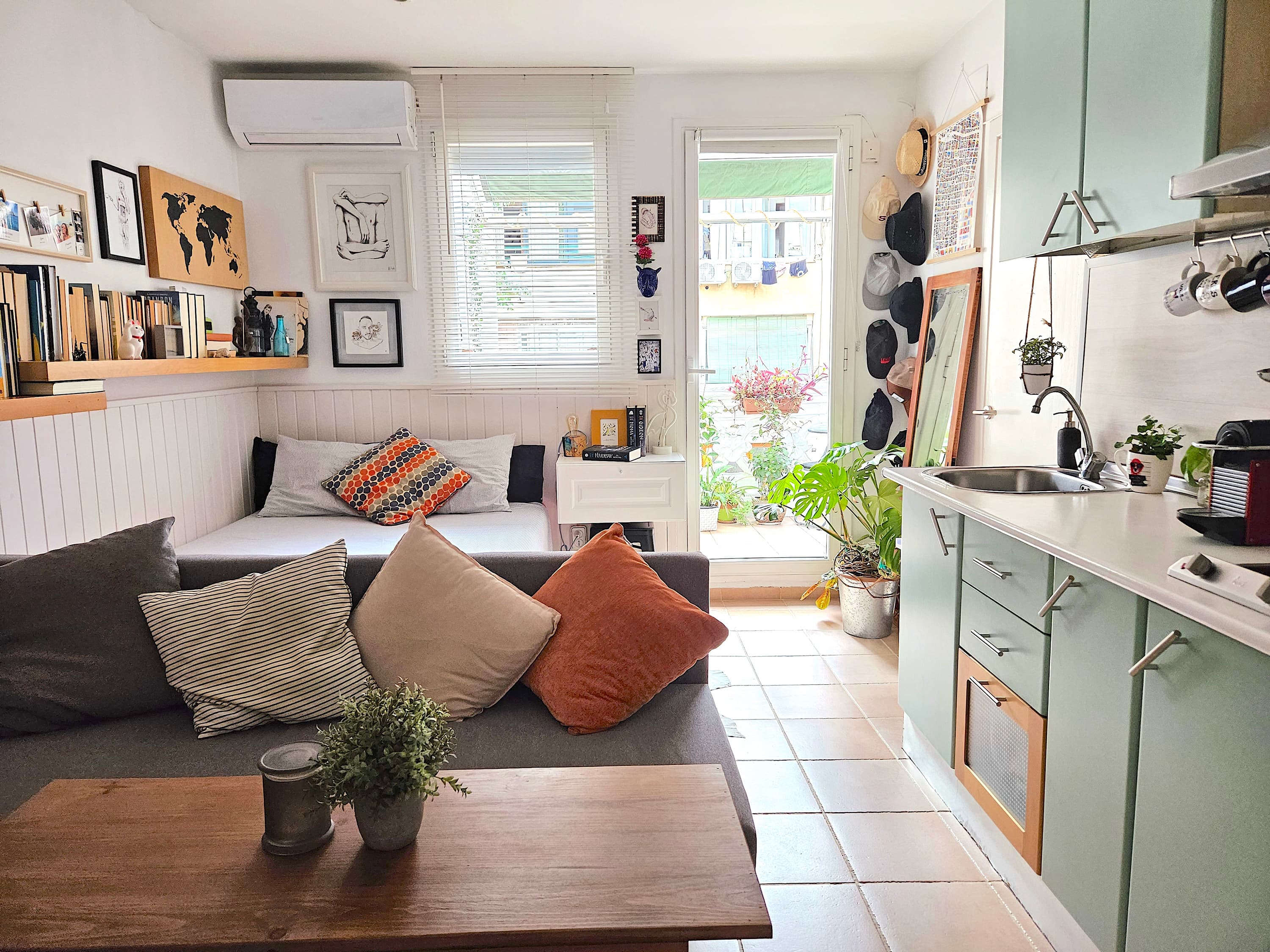
Microhomes in Spanish cities. Reduction of surface area and overoccupancy in response to the increase in rental prices.
In cities like Madrid and Barcelona, market pressure has driven the proliferation of micro-housing and shared spaces in precarious conditions. Although they do not reach the extreme levels of Hong Kong, these cases show a trend towards the progressive reduction of domestic space.
Housing becomes a survival solution, rather than an environment of well-being. The habitability crisis reveals that the housing problem is not limited to access, but deeply affects the quality of inhabited space.
The minimum housing produced by the market does not respond to the real needs of people, but rather to the logic of economic maximization. In this context, guaranteeing the right to housing implies not only ensuring its availability, but also its quality.
Architecture, therefore, must intervene not only in the quantity of housing, but in the conditions that make decent living possible.
4. The role of architecture, from an instrument of capital to a social tool:
Historically, architecture has been complicit—conscious or not—in these dynamics, participating in processes of speculative urbanization. However, it also has the potential to act as a resistance device.
Architectural strategies against speculation:
a) Rehabilitation and reuse (architectural exaptation)
The reuse of existing structures makes it possible to avoid speculative processes linked to new construction and reduces the economic impact on the land. Architectural exaptation proposes reprogramming buildings for new social uses.
b) Cooperative housing and transfer of use models
Models like La Borda in Barcelona demonstrate viable alternatives:
Collective property
Guaranteed use without speculation
Community spaces
This system eliminates housing as a financial asset and turns it into social infrastructure.
c) Self-construction and self-rehabilitation
Participatory strategies make it possible to empower inhabitants and reduce costs, generating more resilient models in the face of the market.
d) Flexible and adaptable design
Architecture must abandon functional rigidity to allow adaptations over time, reducing obsolescence and avoiding speculative cycles.
5. Architectural projects against speculation and evictions:
_Cité Frugès (Bordeaux)

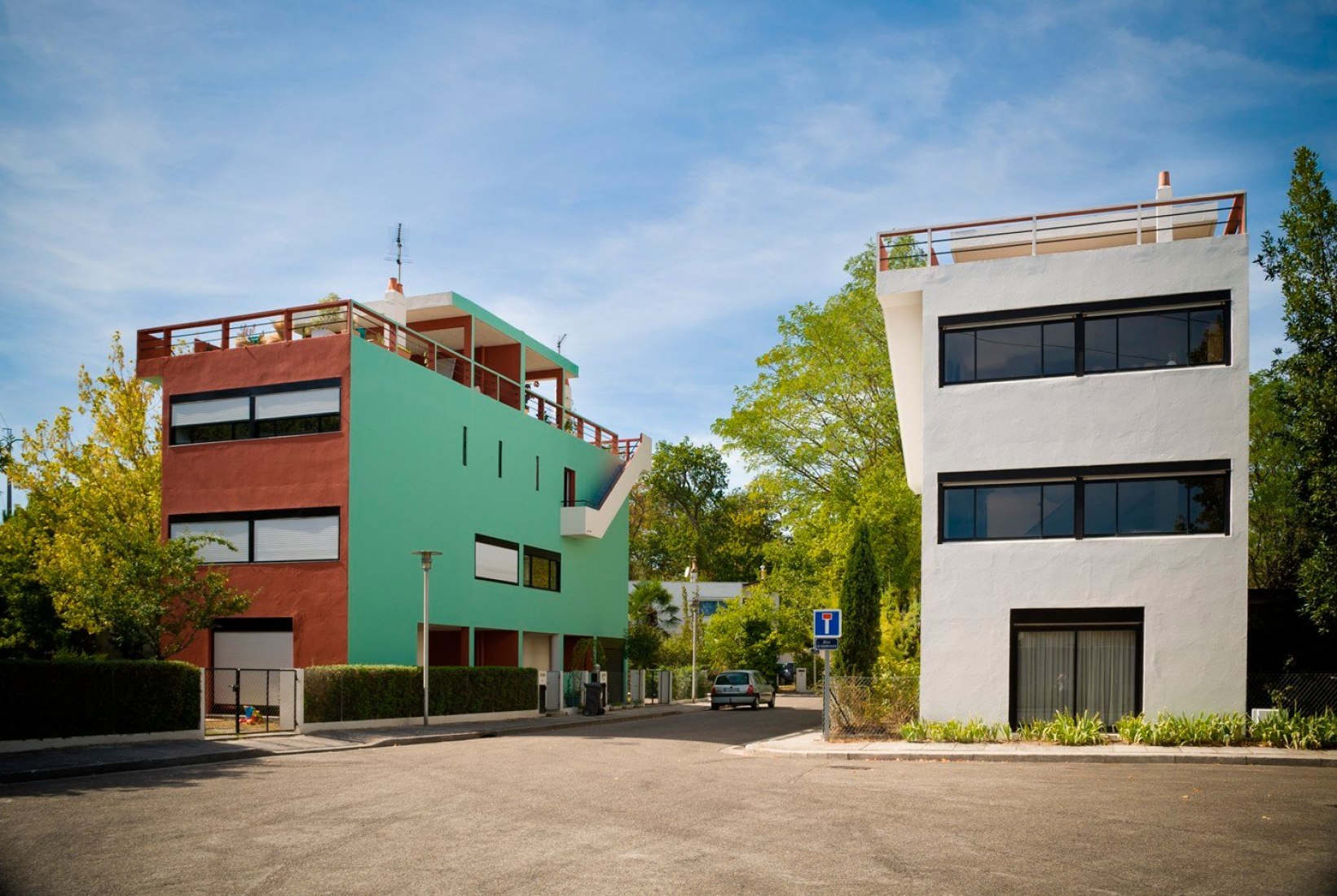
The Cité Frugès, designed by Le Corbusier in Bordeaux, constitutes a pioneering experiment in modern social housing based on standardization, mass production and the rationalization of domestic space to reduce costs and facilitate access to working-class housing. However, its greatest relevance lies in the subsequent evolution of the complex, since the homes were modified by its inhabitants, evidencing the need for flexibility and adaptation in the architecture. This process demonstrates that housing should not be understood as a closed object, but as an open system capable of transforming over time, anticipating contemporary debates about appropriation, habitability and the relationship between design and everyday life.
_Walden 7 (Barcelona)

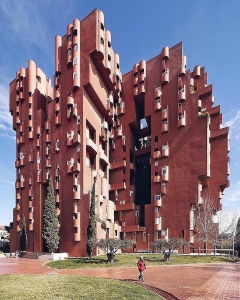
Walden 7, Barcelona, Ricardo Bofill (1975). Residential complex that explores collective life through an interconnected vertical structure.
Walden 7, designed by Ricardo Bofill in Barcelona, constitutes a radical experiment in collective housing that questions the individualistic residential model through a spatial organization based on interconnected patios, complex routes and shared spaces. The project proposes a “vertical community” where architecture favors social interaction, generating a strong collective identity compared to the isolation of conventional housing. Through its modular structure and labyrinthine configuration, Walden 7 introduces a new way of living that combines privacy and community life, anticipating contemporary models of collaborative housing and proposing architecture as a support for social relationships.
_Cité Manifeste (Mulhouse)

Cité Manifeste (2005). Contemporary social housing laboratory.
The Cité Manifeste brings together several international architects in a collective experiment in social housing. The objective was to exceed the usual minimum standards, introducing diversity, flexibility and spatial quality.
Each block proposes a different typology, exploring new ways of living. This project demonstrates that social housing can be innovative and dignified, breaking with impoverishing standardization.
_Building 111 (Terrassa)
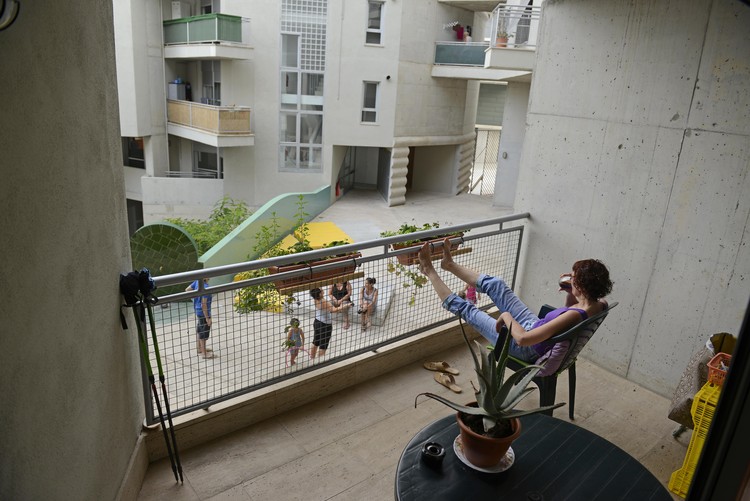
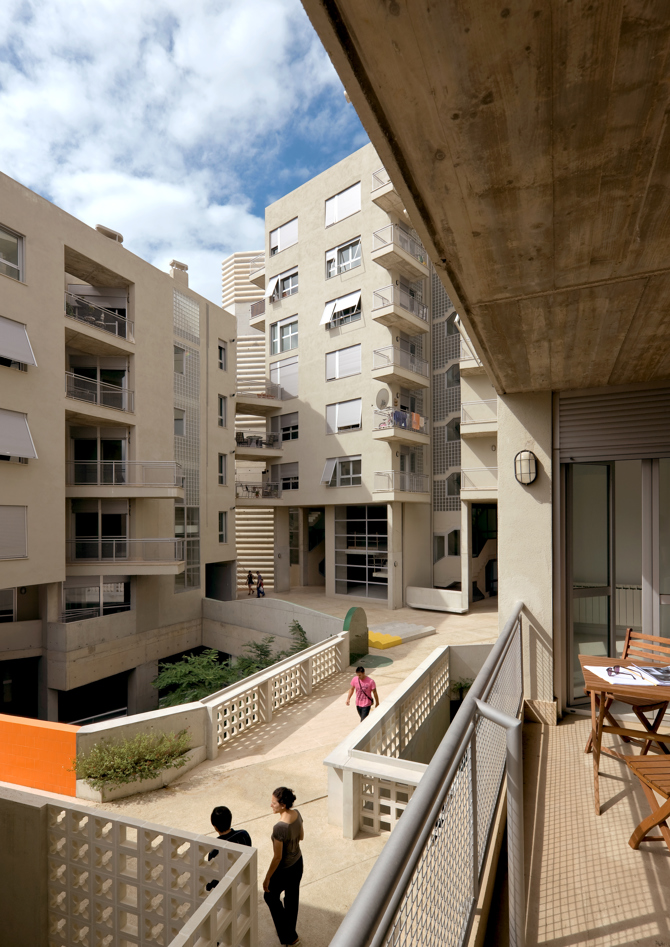

Building 111 of social housing, Terrassa (Flores & Prats, 2010).
Building 111 by Flores & Prats Arquitectes in Terrassa is conceived as a critical proposal against traditional models of social housing subjected to the logic of the market, betting on an architecture that prioritizes the collective dimension over the individual. Organized through galleries, patios and shared intermediate spaces, the project actively promotes the relationship between neighbors and the construction of social networks, understanding housing not as an isolated object but as a community infrastructure capable of generating mutual support and cohesion. Its flexible design allows it to be adapted to different ways of living, reinforcing residential stability in vulnerable contexts and acting as a tool against exclusion and the risk of eviction. In this sense, the building questions housing as a commodity and proposes, from the public perspective, an alternative model where value resides in the collective, evidencing the potential of architecture to resist speculative dynamics of urban land.
_La Borda (Barcelona)


La Borda housing cooperative, Barcelona (Lacol, 2021).
The La Borda Cooperative Housing project, developed by Lacol in Barcelona, constitutes a contemporary reference in the fight against real estate speculation through a cooperative model in transfer of use that detaches housing from the market and eliminates its status as a financial asset. The building is conceived as a collective infrastructure where ownership is shared and management is community-based, guaranteeing residential stability and avoiding processes of price increases and expulsion. Architecturally, it is organized around common spaces that promote coexistence, mutual support and co-responsibility, also integrating sustainability and energy efficiency criteria. In this sense, La Borda redefines access to housing as a right and not as a commodity, proposing a replicable model that articulates architecture, community and resistance against the speculative dynamics of urban land.
Real estate speculation and evictions are not anomalies of the system, but logical consequences of a model that prioritizes profit over life. In this context, architecture has the responsibility and ability to act as a critical tool.
The contemporary housing crisis cannot be understood as a sum of isolated phenomena, but as the spatial manifestation of an economic model that has subordinated living to the logic of profitability. The financialization of the territory, the urban bombings and evictions are part of the same system that produces inequality, expulsion and housing precariousness. This process not only limits access to housing, but also profoundly transforms its meaning, emptying it of its social, cultural and vital dimension. The coexistence of empty homes and a population without access to a decent home shows a structural contradiction that calls into question the very functioning of the contemporary urban model.
Faced with this scenario, architecture emerges as a discipline with critical and transformative capacity, capable of intervening in the production of space from an alternative logic. Strategies based on rehabilitation, cooperation, flexibility and participation not only offer technical solutions, but also propose a paradigm shift: from housing as a commodity to housing as a right. The cases analyzed demonstrate that it is possible to build fairer housing models, where spatial quality, residential stability and the community dimension are placed at the center. In this sense, the role of architecture is not neutral, but deeply political: contributing to reconfiguring the city as a space of life, equity and social justice.
—
Bibliography:
-
Girado, A. (2025). Procesos de desahucios y espacios de asesoría.
-
UNED. (2023). El problema de la vivienda en España.
-
Rodríguez Vázquez, R., & Cuerno, M. (2025). Quantifying displacement.
-
ELEMENTAL. (2004). Quinta Monroy.
-
Lacaton & Vassal. (2017). Grand Parc Bordeaux.
-
Druot, Lacaton & Vassal. (2011). Bois-le-Prêtre.
-
BKK-3. (2000). Sargfabrik.
-
Le Corbusier. (1926). Cité Frugès.
-
Ginzburg, M. (1928). Narkomfin.
-
Ciudad Sostenible. (2026). La crisis de la vivienda: de la burbuja inmobiliaria al déficit estructural.
-
Espacio Público. (s.f.). Impedir la especulación: regular la utilización del suelo.
-
Gil, J. (s.f.). De la burbuja inmobiliaria a la generación inquilina. Universidad Autónoma de Barcelona.
-
RTVE. (2025). Desahucios, el capítulo más trágico de la crisis de la vivienda.
-
Prou Especulació. (2025). La vivienda como lugar de combate.
-
Lacol. (2018). La Borda: modelo cooperativo de vivienda.
-
Giau+S. (2015). Frente a la especulación: auto-rehabilitación.

