
“God is in the details”: aesthetic, ethical and architectural genealogy of a maxim
The phrase “God is in the details” has transcended disciplinary and temporal boundaries, becoming a guiding principle in literature, art history, philosophy and architecture. Although modern tradition associates it mainly with the architect Ludwig Mies van der Rohe, who adopted it as a professional maxim in the 20th century, its genealogy is broader and more complex. In French realist literature, especially in the work of Gustave Flaubert, detail became a fundamental aesthetic and ethical resource. Later, in the history of art, the German historian Aby Warburg used the expression in his famous German formulation Der liebe Gott steckt im Detail, linking it to his iconological method and the analysis of cultural memory through visual fragments. Finally, in modern architecture, Mies van der Rohe transformed the phrase into a principle of constructive rigor and a symbol of the honesty of the craft.
This article analyzes the genealogy of the phrase in a journey that goes from 19th century literature to contemporary architecture, stopping at its philosophical and ethical uses, and showing how attention to the minimum has become a universal principle of excellence and responsibility. To achieve this, specific examples are integrated: Flaubert’s obsession with mot juste in Madame Bovary (1857), Warburg’s iconographic reading in his Mnemosyne Atlas, and the construction details of Mies van der Rohe’s masterpieces, such as the Farnsworth House (1951) and the Seagram Building (1958). Likewise, philosophical contributions from Heidegger, Benjamin and Merleau-Ponty are included, along with contemporary reflections on sustainability and design.

From left to right, Gustave Flaubert, photograph of Étienne Carjat (1860), Aby Warburg (1925) and Ludwig Mies van der Rohe sitting in the MR chair in his Chicago apartment, for LIFE magazine (1956).
1. Introduction
The expression “God is in the details”—in German Der liebe Gott steckt im Detail—synthesizes the paradox of the transcendent manifesting itself in the minimum, the apparently insignificant or secondary. As Frampton (2009, Critical history of modern architecture, p. 77) points out, architectural modernity was built both on the rejection of ornament and on the exaltation of extreme precision, and this tension between the large and the small constitutes one of the keys to its success.
In literature, this sensitivity was already present in Gustave Flaubert’s obsession with the mot juste, the exact word. In Madame Bovary he stated: “Style must be like perfectly smooth glass that one does not perceive” (Flaubert, 1857/1996, Madame Bovary, p. 53). With this statement, Flaubert showed that true art is manifested not in grandiloquent effects, but in the invisible precision of each word, in the accuracy with which the narrative details that sustain the verisimilitude and psychological depth of the work are constructed.

Cover of the first edition of Madame Bovary (1857).
In the realm of art history, Aby Warburg insisted that “seemingly minor” details actually contained the cultural key to the images. His famous statement Der liebe Gott steckt im Detail (Warburg, 2004, Atlas Mnemosyne, p. 27) was not just an aphorism, but a research program: the meticulous analysis of gestures, folds and visual fragments made it possible to discover the traces of cultural memory in Renaissance art and its relationship with Antiquity. As Didi-Huberman (2002, The surviving image: History of art and the time of ghosts according to Aby Warburg, p. 41) emphasizes, Warburg inaugurated a way of reading images based on what seemed secondary, but was fundamental.
In architecture, Mies van der Rohe adopted the English version “God is in the details” as a design principle and professional ethics. For Mies, each joint, each finish and each material had to be executed with absolute rigor, since the coherence and beauty of the whole depended directly on precision in the seemingly smallest. “Each detail expresses the structure of the entire building” (Mies van der Rohe, 1991, The Artless Word: Mies van der Rohe on the Building Art, p. 92). This way of conceiving the work transformed the detail into a place of aesthetic revelation, but also into a moral imperative that guaranteed the honesty of the architect towards his work and towards society.
The strength of this phrase lies in its transversality. It does not belong exclusively to one discipline, but is reiterated in literature, art, architecture, philosophy and even in contemporary digital design. From a philosophical perspective, authors such as Heidegger have shown that detail is the place where aletheia, the unconcealment of being, occurs (Heidegger, 2014, Being and Time, p. 112). Benjamin, for his part, affirmed that the fragments and ruins were bearers of historical truth (Benjamin, 1980, Illuminations, p. 44). In Merleau-Ponty’s phenomenology, the small reveals the totality of perceptual experience (Merleau-Ponty, 1993, Phenomenology of Perception, p. 76).
At present, the phrase is applied to contexts such as sustainable architecture, where energy efficiency depends on details such as the sealing of joints or the orientation of glass (Zumthor, 2014, Thinking about architecture, p. 101). It also applies to digital design, where a minor error in the code can compromise an entire system (Picon, 1992, French Architects and Engineers in the Age of Enlightenment, p. 245). In urban planning, the quality of public spaces is decided in the seemingly minor: the ergonomics of a bench, the placement of a street lamp, the texture of a pavement (Condit, 1968, American Building: Materials and Techniques from the Beginning of the Colonial Settlements to the Present, p. 311).
This tour shows that the phrase “God is in the details” is not a mere rhetorical ornament, but a philosophy of doing. In each discipline, detail becomes the condition of possibility of the true, the beautiful and the ethical. This article aims to trace that genealogy, showing how the small contains the great, how the insignificant is, in reality, the place where the essential is hidden.
2. First appearances: literature and philosophy of detail
Flaubert worked each phrase like a goldsmith. In Madame Bovary, the description of a hat or a piece of furniture is not decorative, but symbolic (Flaubert, 1857/1996, Madame Bovary, p. 142). According to Vargas Llosa (1975, The Perpetual Orgy: Flaubert and Madame Bovary, p. 112), these details reveal both the social aspirations and the existential emptiness of Emma Bovary. Literary criticism has highlighted this ethic of detail: Auerbach (1996, Mimesis: The representation of reality in Western literature, p. 511) sees in nineteenth-century realism the transformation of everyday life as a way of accessing the truth, and Bourdieu (1995, The rules of art, p. 201) interprets in Flaubert an aesthetic discipline that inaugurates the “rules of art.”
Flaubert worked each phrase like a goldsmith. In Madame Bovary, the description of a hat or a piece of furniture is not decorative, but symbolic (Flaubert, 1857/1996, Madame Bovary, p. 142). According to Vargas Llosa (1975, The Perpetual Orgy: Flaubert and Madame Bovary, p. 112), these details reveal both the social aspirations and the existential emptiness of Emma Bovary. Literary criticism has highlighted this ethic of detail: Auerbach (1996, Mimesis: The representation of reality in Western literature, p. 511) sees in nineteenth-century realism the transformation of everyday life as a way of accessing the truth, and Bourdieu (1995, The rules of art, p. 201) interprets in Flaubert an aesthetic discipline that inaugurates the “rules of art.”
On a philosophical level, Flaubert’s emphasis on the minuscule can be read as a literary materialization of the positivism and empiricism of his time. The detail becomes evidence, a concrete trace that guarantees the veracity of the story. In this way, realist literature not only reflects social life, but also builds a mode of knowledge based on the tangible. As Auerbach (1996, Mimesis: The Representation of Reality in Western Literature, p. 512) warns, “the greatness of the real is revealed in the thoroughness of what is narrated.”
Flaubert’s legacy influenced later generations of writers and critics, consolidating a tradition in which detail is perceived as a place of aesthetic and moral truth. Thus, the genealogy of the phrase “God is in the details” finds in Flaubert not its literal origin, but one of its most forceful and transformative expressions.
3. Aby Warburg and the iconological gaze
The art historian Aby Warburg (1866-1929) plays a fundamental role in the genealogy of the phrase “Der liebe Gott steckt im Detail”. Although he was not its inventor, its use in academic contexts and its insistence on the meticulous analysis of images gave it a central place in the consolidation of the maxim within the history of art.
Warburg developed a way of understanding images where small details—a gesture, a fold of clothing, the position of a hand, the design of an ornament—were key to interpreting not only the immediate meaning of the work, but also its layers of cultural memory. His famous theory of the Nachleben der Antike (the “survival of Antiquity”) maintained that in the details of Renaissance images, gestures and symbols inherited from the classical world survived, transformed and resignified by modern artists.
For Warburg, each microelement was a historical symptom. For example, in the analysis of Botticelli’s works, the flying hair of the female figures was not a simple aesthetic resource, but the survival of an ancient iconographic motif that expressed movement and passion. That small detail connected Botticelli with Antiquity and with a specific way of representing vital energy.
The unfinished Mnemosyne Atlas project is a paradigmatic example of the value of detail. Composed of panels full of images organized in visual constellations, the Atlas linked gestures, motifs and fragments from different periods and cultures. Each detail functioned as a memory bridge between distant times, revealing the persistence and transformation of universal symbols. As Didi-Huberman (2002, Faced with Time: History of Art and Anachronism of Images, p. 41) explains, Warburg understood detail as a vehicle of cultural memory, a tool to decipher the latent energy in artistic forms.
Warburg’s insistence that “the good Lord is in the details” inspired an entire generation of art historians, especially Erwin Panofsky, who systematized iconology as a discipline. For Panofsky (1991, Meaning in the Visual Arts, p. 65), the analysis of a small object in a painting could reveal the ideological and religious background of an era. He also influenced Walter Benjamin, who argued that fragments and ruins contained historical truth (Benjamin, 1980, The Origin of German Baroque Drama, p. 44).
In short, in Warburg the phrase acquires a cognitive and hermeneutic dimension: the detail is not accidental, but the key to accessing large systems of cultural significance.

Panels from Aby Warburg’s Mnemosyne Atlas.
4. Ludwig Mies van der Rohe and modern architecture
The German architect Ludwig Mies van der Rohe (1886-1969) is the one who most popularized the phrase in its English version: “God is in the details.” Under his pen and architectural practice, the maxim became a guiding principle of modernism, linking minimalist aesthetics with professional ethics and technical precision.
Mies understood detail not as ornament, but as the place where constructive honesty was manifested. Each technical decision had to reveal the essence of the material and the logic of the structure. His obsession with precision led him to meticulously work on each joint, each profile and each finish, convinced that the integrity of the whole depended on the small.
In the Farnsworth House (1951), this glass and steel house in Illinois became a manifesto of Miesian minimalism. In such a transparent building, every metal joint and every joint acquires total visibility: any oversight would be exposed. The perfection of the whole lies in the absolute precision of each detail (Neumeyer, 1995, Mies van der Rohe: The word without artifice, p. 144).
In the Seagram Building (1958) in New York, designed with Philip Johnson, Mies used bronze and glass profiles with millimeter control. The proportions, the repetition of modules and the accuracy of the joints make the building an iconic work where formal purity depends entirely on the construction details (Curtis, 1996, Modern architecture since 1900, p. 342).
The Barcelona Pavilion (1929), although ephemeral, showed how details in marble, glass and steel could generate a spatial experience of maximum elegance. The almost invisible union of precious materials turned the small into the sublime (Schulze, 1985, Mies van der Rohe: A Critical Biography, p. 211).
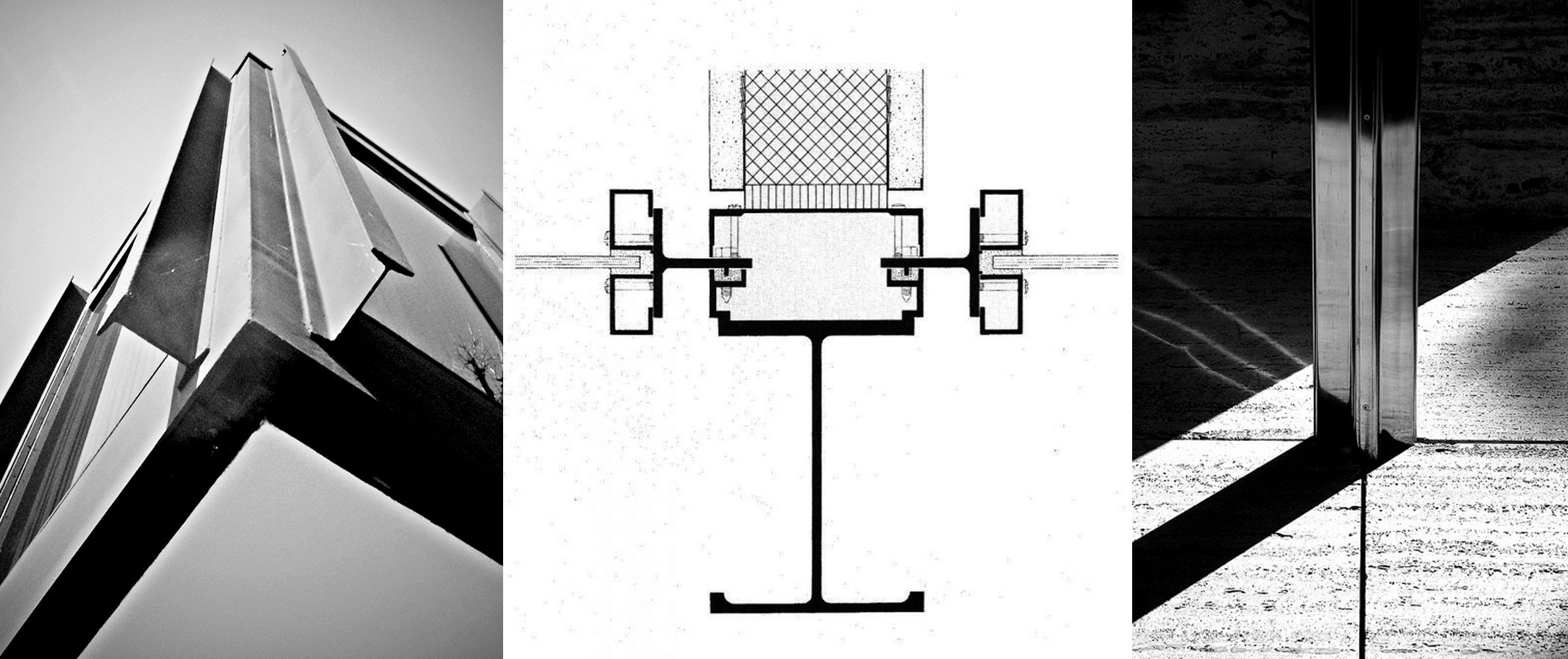
Some details of the work of Mies van der Rohe. From left to right, detailed photograph of a corner of the Crown Hall façade, construction detail of the Seagram Building and photograph of the pillar in contact with the pavement of the Barcelona Pavilion.
For Mies, the architect who neglects the details compromises not only the aesthetics, but also the dignity of the profession. His famous phrase thus becomes a reminder that the architect’s work requires rigor, honesty and discipline. The detail is not only technical: it is an act of moral responsibility towards society and towards the truth of the material (Schulze, 1985, Mies van der Rohe: A Critical Biography, p. 212).
Mies conceived architecture as a search for order and clarity. For him, the detail was a place where the spirit of the work was revealed, in line with his other famous maxim: “Less is more.” Both phrases express that architectural greatness does not arise from excess, but from the silent care of the minimum.
Mies’ insistence that “God is in the details” marked entire generations of architects and designers. Today, an emphasis on detail remains central to high-precision architecture, from glass skyscrapers to contemporary furniture design. His legacy demonstrates that the detail is, simultaneously, a microcosm of the work and a universal ethical statement.
5. Interdisciplinary comparison
The phrase “God is in the details” reaches full meaning when analyzed comparatively between disciplines. Literature, art history and architecture show three different but complementary ways of understanding the function of detail: as psychological revelation, as cultural trace and as technical and ethical statement.
5.1. Flaubert and realist literature
In the case of Flaubert, the detail functions as a mechanism of narrative revelation. It is not a superficial ornamentation, but a tool to show the depth through the minimum. The description of a piece of furniture, a dress or an everyday gesture has the ability to reveal the psychology of the characters and the social tensions of 19th century France. Vargas Llosa (1975, The Perpetual Orgy: Flaubert and Madame Bovary, p. 112) states that Flaubert’s accuracy is an “x-ray of frustrated aspirations,” in which the material detail reflects existential emptiness. Auerbach (1996, Mimesis: The Representation of Reality in Western Literature, p. 511) adds that in realist narrative the detail becomes a vehicle of truth, as it constructs a faithful representation of ordinary life.
5.2. Warburg and art history
In Warburg’s work, the detail reveals not so much the individual as the collective. Visual fragments, the folds of clothing or hair flying in the wind are understood as symptoms of cultural memory. Didi-Huberman (2002, The surviving image: History of art and the time of ghosts according to Aby Warburg, p. 41) highlights that Warburg saw a latent energy in the small, capable of connecting different times and spaces. Panofsky (1991, Meaning in the Visual Arts, p. 65) extends this view by pointing out that a minor pictorial object can reveal entire ideologies. The detail, therefore, becomes a node of historical and symbolic interpretation.
5.3. Mies van der Rohe and modern architecture
In Mies’s field, the detail takes on a double character: it is technical and it is moral. In buildings such as the Farnsworth House or the Seagram Building, the absolute visibility of the structural joints requires that each element be resolved with precision. As Neumeyer (1995, Mies van der Rohe: The word without artifice, p. 144) explains, in Mies detail is inseparable from the idea of formal purity, while Schulze (1985, Mies van der Rohe: A Critical Biography, p. 212) emphasizes that taking care of it is also a matter of professional honesty.
5.4. Comparative dimension
If analyzed together, Flaubert, Warburg and Mies show three approaches to detail that, although born from different contexts, converge on the same idea: the small is essential to reveal the large.
– In Flaubert, the minimum constructs psychological and narrative truth.
– In Warburg, the marginal becomes a cultural symptom.
– In Mies, the technical expresses the entire work and the ethics of the architect.
This parallelism allows us to speak of a transversal principle that crosses artistic and technical disciplines: the conviction that the universal is reflected in the particular, that the invisible sustains the visible, and that perfection depends on attention to the apparently insignificant.
5.5. Comparative table
| Author | Discipline | Detail function | Main dimension |
| Gustave Flaubert | Literature | Reveals psychology and social context | Ethics and aesthetics |
| Aby Warburg | Art history | Decipher cultural symbolism | Cognitive and symbolic |
| Ludwig Mies van der Rohe | Architecture | Expresses structural and moral coherence | Technique and ethics |
6. Philosophy and ethics of detail
The phrase “God is in the details” is not limited to an aesthetic or technical principle, but has profound implications in the field of philosophy, ethics and theology. Its conceptual strength lies in its ability to transcend disciplines and become a universal criterion of rigor, truth and responsibility.
6.1. theological dimension
The theological origin of the expression goes back to the idea that the divine is revealed in the everyday. Christian tradition insists that creation is perfect in all its parts, from the great cosmic structures to the smallest elements of nature. This idea finds echo in Warburg’s phrase: the small can contain the mystery of the absolute. Attending to detail is not just a matter of aesthetics, but a form of reverence for life and the world.
6.2. Philosophical dimension
From philosophy, the detail is interpreted as a place of unconcealment. Heidegger (2014, Being and Time, p. 112) explains that being is shown in the concrete, in what seems insignificant but reveals the world. For Merleau-Ponty (1993, Phenomenology of Perception, p. 76), the perception of a detail—the texture of a surface, a shade of color, a bodily gesture—opens the door to the totality of the experience. Benjamin (1980, The origin of German baroque drama, p. 44) considered that the fragments, ruins and remains contained the historical truth, since the drama of the past was condensed in them. Thus, in contemporary philosophy, detail becomes a privileged access point to meaning.
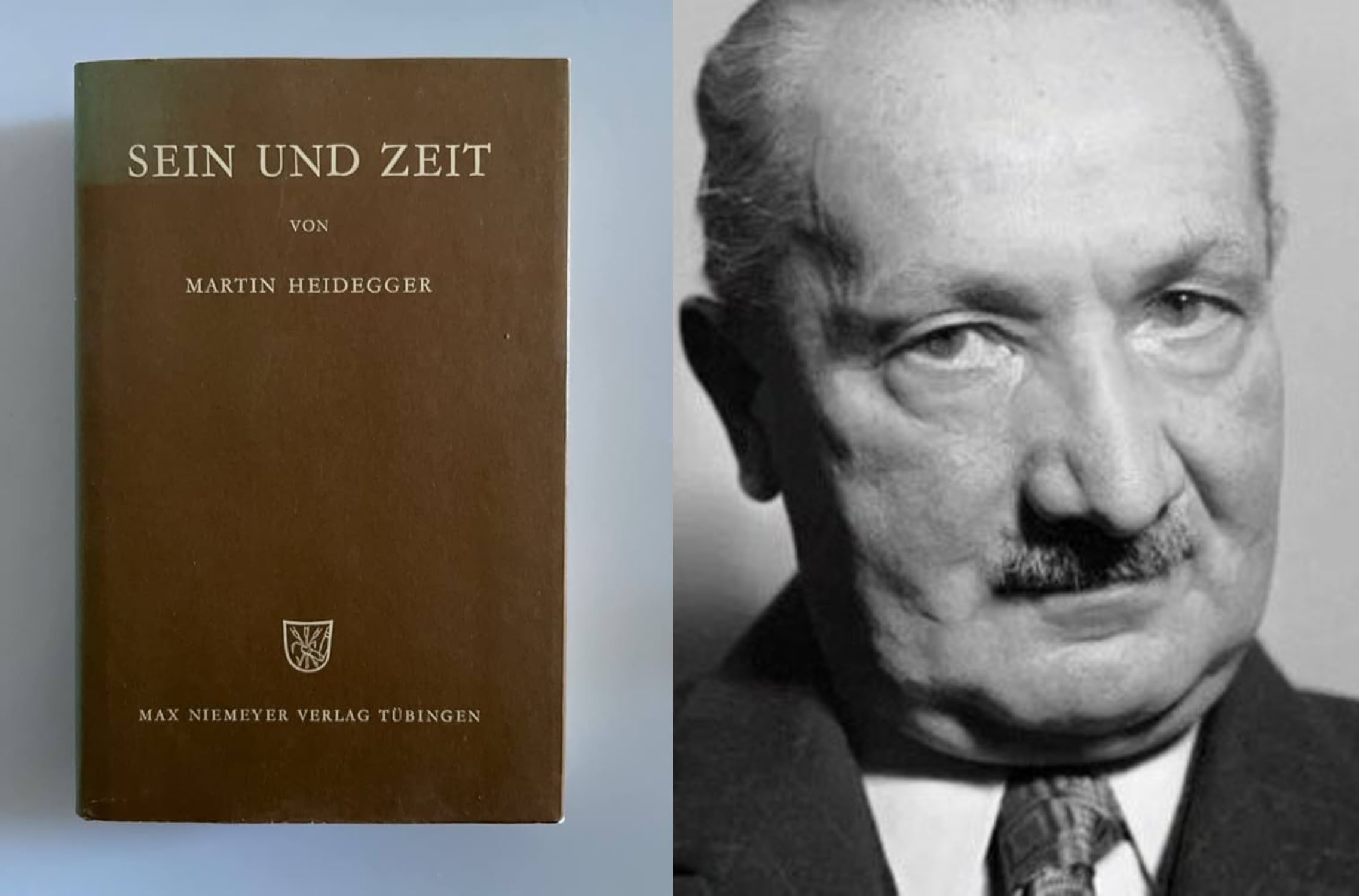
From left to right, publication of “BEING AND TIME”, by Martin Heidegger, in the photograph on the right.
6.3. Ethical dimension
Attention to detail also has ethical value. Taking care of the minimum implies a form of responsibility towards the work, towards others and towards society. An architect who poorly resolves a joint compromises the safety and durability of the building; a writer who neglects a word betrays the veracity of his narrative. The detail is not trivial: it is the place where the integrity of the work and the honesty of the creator come into play. As Schulze (1985, Mies van der Rohe: A Critical Biography, p. 212) recalls, for Mies professional ethics is measured in the care of the small.
6.4. Aesthetic dimension
In aesthetics, detail acts as the core of the experience of beauty. Ruskin (2003, The Seven Lamps of Architecture, p. 88) argued that love for details was a form of virtue, because it allowed us to perceive the greatness of the small. In painting, the precise brushstroke of a Rembrandt or a Vermeer concentrates a world of meanings in a minimal gesture. In architecture, unions, proportions and finishes are capable of defining the perceptual totality of the building. Zumthor (2014, Thinking about architecture, p. 101) insists that architectural details transmit emotions, because they are the points of contact between the human being and the work.
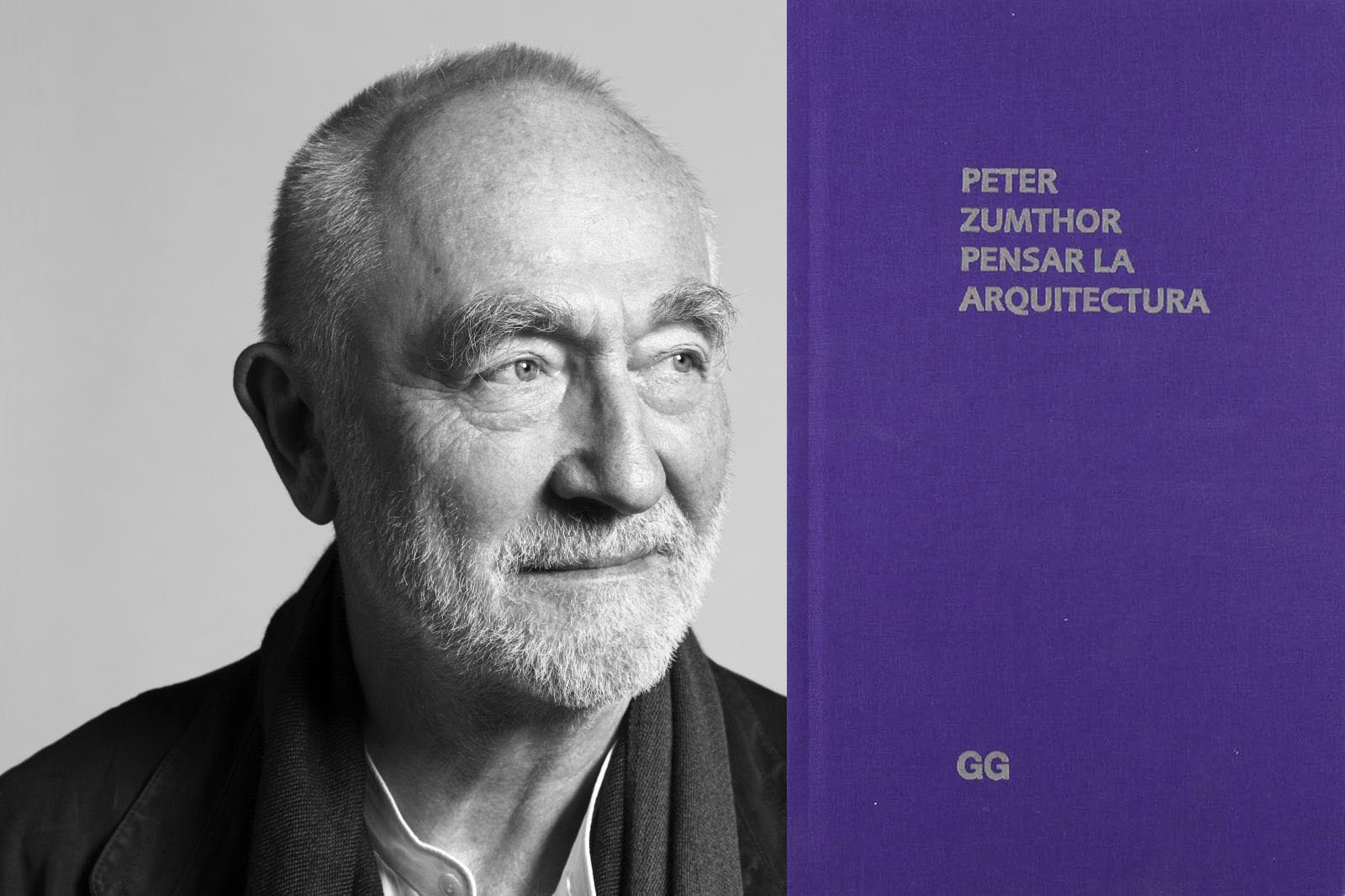
From left to right, Peter Zumthor and his publication “THINKING ARCHITECTURE”.
6.5. Interdisciplinary dimension
The transversality of the detail shows that it does not belong to an exclusive field. In literature, it reflects psychology and context; in art, deciphers cultural symbols; in architecture, it ensures coherence and functionality; in digital design, it guarantees efficiency and user experience. Pallasmaa (2010, The eyes of the skin: Architecture and the senses, p. 59) summarizes it by pointing out that it is the tactile and visual details that generate the experience of living.
6.6. Convergence of ethics, aesthetics and philosophy
Attention to detail condenses a triple requirement:
1. Ethics: because small things compromise the integrity and honesty of the author.
2. Aesthetics: because beauty is revealed in the precision and coherence of the parts.
3. Philosophical: because the minimum contains the key to being and meaning.
The phrase “God is in the details” can then be interpreted as a synthesis of these three dimensions: the divine is not the grandiose, but the precise; the truth is found in the seemingly banal; Excellence is the result of patient and meticulous work.
7. Contemporary dimensions
The phrase “God is in the details” remains fully valid in the contemporary world, where technological, social and environmental challenges demand increasingly careful attention to the minuscule. Its application transcends arts and architecture, reaching industrial design, sustainability, urban planning, digital engineering and pedagogy. Below are its main current dimensions.
7.1. Sustainable architecture
In contemporary architecture, details are decisive to achieve standards of sustainability and energy efficiency. Unions, seals and encounters between materials determine the ability of a building to save energy, prevent leaks and maintain thermal comfort. As Zumthor (2014, Thinking about architecture, p. 101) points out, architectural details are not mere finishing touches, but places where the work “breathes” and dialogues with its users.
– The correct arrangement of windows and glass influences passive solar gain.
– Sealing joints prevents thermal losses.
– The precise choice of materials guarantees durability and lower environmental impact.
In this way, sustainability is played in small ways: a millimeter more or less can make the difference between an efficient building and a wasteful one.
7.2. Digital design and new technologies
In the digital sphere, detail takes on a critical nature. A single incorrect line of code can compromise an entire system, as Picon (1992, French Architects and Engineers in the Age of Enlightenment, p. 245) warns. In interface design, it is the details that define the user experience:
– The loading time of a web page.
– The intuitive layout of buttons.
– The legibility of the typography on different devices.
Every micro decision translates into satisfaction, trust and usability. Thus, the maxim takes on a new meaning: in a digitalized world, “the small is what is decisive.”
7.3. Urban planning and public life
In urban planning, the quality of life in the city depends largely on seemingly minor details. Condit (1968, American Building: Materials and Techniques from the Beginning of the Colonial Settlements to the Present, p. 311) reminds us that street furniture—a bench, a street lamp, a pavement—conditions the way in which people experience public space.
– The height of a bench can encourage or prevent the inclusion of older people.
– The location of a pedestrian crossing defines accessibility.
– The texture of a floor determines the safety for those who walk.
Urban detail, therefore, becomes an act of social justice: carefully designing the minimum means thinking about all citizens.
7.4. Education and pedagogy of detail
Training attention to detail is a crucial pedagogical practice in the training of artists, architects and designers. Tafuri (1980, Critical History of Modern Architecture, p. 201) emphasizes that learning to observe and execute the minimum develops ethical discipline and professional rigor. In architecture workshops, for example, students learn that an error on a plan or a model can ruin an entire project.
– Teaching detail encourages patience.
– Train sensitivity towards the concrete.
– Cultivate the ethics of responsibility in doing.
Thus, detail is also an educational tool that builds character and not just technique.
7.5. Engineering, science and medicine
Contemporary science shows that the small contains the great. In precision engineering, a millimeter failure can destroy an entire piece of machinery. In medicine, observing a detail on an x-ray can save a life. In molecular biology, the most revolutionary discoveries have occurred from microscopic attention to minute structures.
In this sense, the phrase acquires a scientific dimension: the minuscule is a condition of the vital, the microscopic supports the macroscopic.
7.6. Globalization and contemporary culture
In a globalized world, detail also acquires cultural and political value. Designing a product for an international market requires paying attention to cultural nuances that may seem insignificant: the color of a logo, the meaning of a gesture, the translation of a word. A slight error can cause misunderstanding or rejection.
In this way, globalization demonstrates that “the universal” is only possible if we pay attention to the local, the particular, the details of each context.
7.7. Contemporary synthesis
The contemporary dimensions of the phrase show that it is not a vestige of the past, but a living principle. In sustainability, digital, urban planning, education and science, detail is the place where quality, ethics and truth of human projects are at stake.
The phrase is thus revealed as a transversal principle of the 21st century: the great depends on the small, the universal is sustained by the particular, and the future is decided by caring for the tiny.
8. Conclusions
The phrase “God is in the details” is not a simple aesthetic sentence nor a lucky occurrence attributed to a modern architect. It is, in reality, a cultural synthesis that crosses centuries, disciplines and ways of thinking, showing that the universal is always revealed in the particular and that excellence is played in the minuscule.
8.1. Historical balance
The journey through different disciplines shows that the phrase has had multiple appropriations. In Flaubert’s realist literature, detail is the cornerstone of narrative verisimilitude and psychological portraiture. Each piece of furniture, each dress, each everyday object acquires symbolic and social value, condensing the complexity of life into minimal gestures. In Warburg’s art history, detail is the cultural symptom par excellence, a trace loaded with memory that connects distant eras. In the architecture of Mies van der Rohe, the detail becomes the moral measure of the architect, the tangible proof of material honesty and structural coherence.
8.2. Interdisciplinary connections
Although these are different contexts, there is a common axis: small is not secondary, but essential. In literature, the minuscule reveals psychology; in art, it deciphers ideologies; in architecture, it guarantees formal and ethical purity. This transversal axis shows that the phrase is not the exclusive property of a discipline, but a universal principle of human action.
8.3. Philosophical dimension
From philosophy, it has been seen that detail functions as a place of revelation. For Heidegger, the unconcealment of being occurs in the concrete. For Merleau-Ponty, the perception of the minimum opens up the totality of experience. For Benjamin, fragments are the guardians of historical truth. These authors agree in pointing out that the small has an ontological, cognitive and ethical power, far beyond the ornamental.
8.4. Contemporary relevance
Today, the phrase remains fully valid. In sustainable architecture, details are a condition of efficiency and environmental respect. In digital design, the details define the user experience and the security of the systems. In urban planning, small things—a bench, a sign, a pavement—condition social inclusion and quality of life. In education, the pedagogy of detail forms rigor, patience and ethics. In science and medicine, the observation of the minuscule saves lives and opens new horizons of knowledge.
8.5. Ethical and aesthetic synthesis
The phrase synthesizes three fundamental dimensions:
1. Ethics: taking care of the minimum is a form of responsibility towards others and towards society.
2. Aesthetics: beauty is manifested in the coherence of the details.
3. Philosophical: the small is the place of unconcealment and truth.
8.6. A philosophy of doing
“God is in the details” is ultimately a philosophy of doing. It expresses that greatness is not built in grandiloquent gestures, but in the sum of meticulous acts. That perfection is not in the apparent, but in the invisible that sustains the form. That honesty is played in what no one sees, but sustains what everyone sees.
In this sense, the phrase is a warning and an inspiration. Warn against superficiality and negligence, and remember that the essential is hidden in the minimum. It inspires writers, artists, architects, engineers and designers to understand that detail is not an ornament, but the very core of truth, beauty and ethics.
Bibliography
Adorno, T. W. (2004). Aesthetic theory. Taurus.
Auerbach, E. (1996). Mimesis: The representation of reality in Western literature. Economic Culture Fund.
Barthes, R. (1982). The zero degree of writing. 21st century.
Benjamin, W. (1980). The origin of German baroque drama. Taurus.
Benjamin, W. (2005). Illuminations. Taurus.
Bourdieu, P. (1995). The rules of art. Anagram.
Condit, C. W. (1968). American Building: Materials and Techniques from the Beginning of the Colonial Settlements to the Present. University of Chicago Press.
Curtis, W.J.R. (1996). Modern architecture since 1900. Phaidon.
Didi-Huberman, G. (2002). The surviving image: Art history and the time of ghosts according to Aby Warburg. Abada.
Didi-Huberman, G. (1999). In the face of time: History of art and anachronism of images. Paidós.
Eco, U. (2005). History of beauty. Lumen.
Flaubert, G. (1857/1996). Madame Bovary. Gallimard.
Flaubert, G. (1980). Correspondance. Gallimard.
Frampton, K. (2009). Critical history of modern architecture. I reversed.
Giedion, S. (1999). Space, time and architecture. Harvard University Press.
Gombrich, E. H. (1986). Aby Warburg: An Intellectual Biography. University of Chicago Press.
Habermas, J. (1990). The philosophical discourse of modernity. Taurus.
Heidegger, M. (2014). Being and time. Paidós.
Kaufmann, E. (1995). The architecture of the Enlightenment. Alliance.
Merleau-Ponty, M. (1993). Phenomenology of perception. Peninsula.
Mies van der Rohe, L. (1991). The Artless Word: Mies van der Rohe on the Building Art. MIT Press.
Neumeyer, F. (1995). Mies van der Rohe: The word without artifice. The Sketch.
Norberg-Schulz, C. (1980). Genius Loci: Towards a Phenomenology of Architecture. Rizzoli.
Panofsky, E. (1991). Meaning in the visual arts. Alliance.
Pallasmaa, J. (2010). The eyes of the skin: Architecture and the senses. Gustavo Gili.
Picon, A. (1992). French Architects and Engineers in the Age of Enlightenment. MIT Press.
Rowe, C. (1999). Mannerism and modern architecture. Gustavo Gili.
Ruskin, J. (2003). The seven lamps of architecture. Chair.
Schulze, F. (1985). Mies van der Rohe: A Critical Biography. University of Chicago Press.
Tafuri, M. (1980). Critical history of modern architecture. Gustavo Gili.
Vargas Llosa, M. (1975). The perpetual orgy: Flaubert and Madame Bovary. Six Barral.
Warburg, A. (2004). The snake ritual. Akal.
Warburg, A. (2005). The renewal of pagan antiquity. Alliance.
Warburg, A. (2010). Atlas Mnemosyne. Akal.
Wölfflin, H. (2000). Fundamental concepts of art history. Alliance.
Zumthor, P. (2014). Think about architecture. Gustavo Gili.

